
Is Argon-Filled Insulated Glass Worth It? The U-Value Math
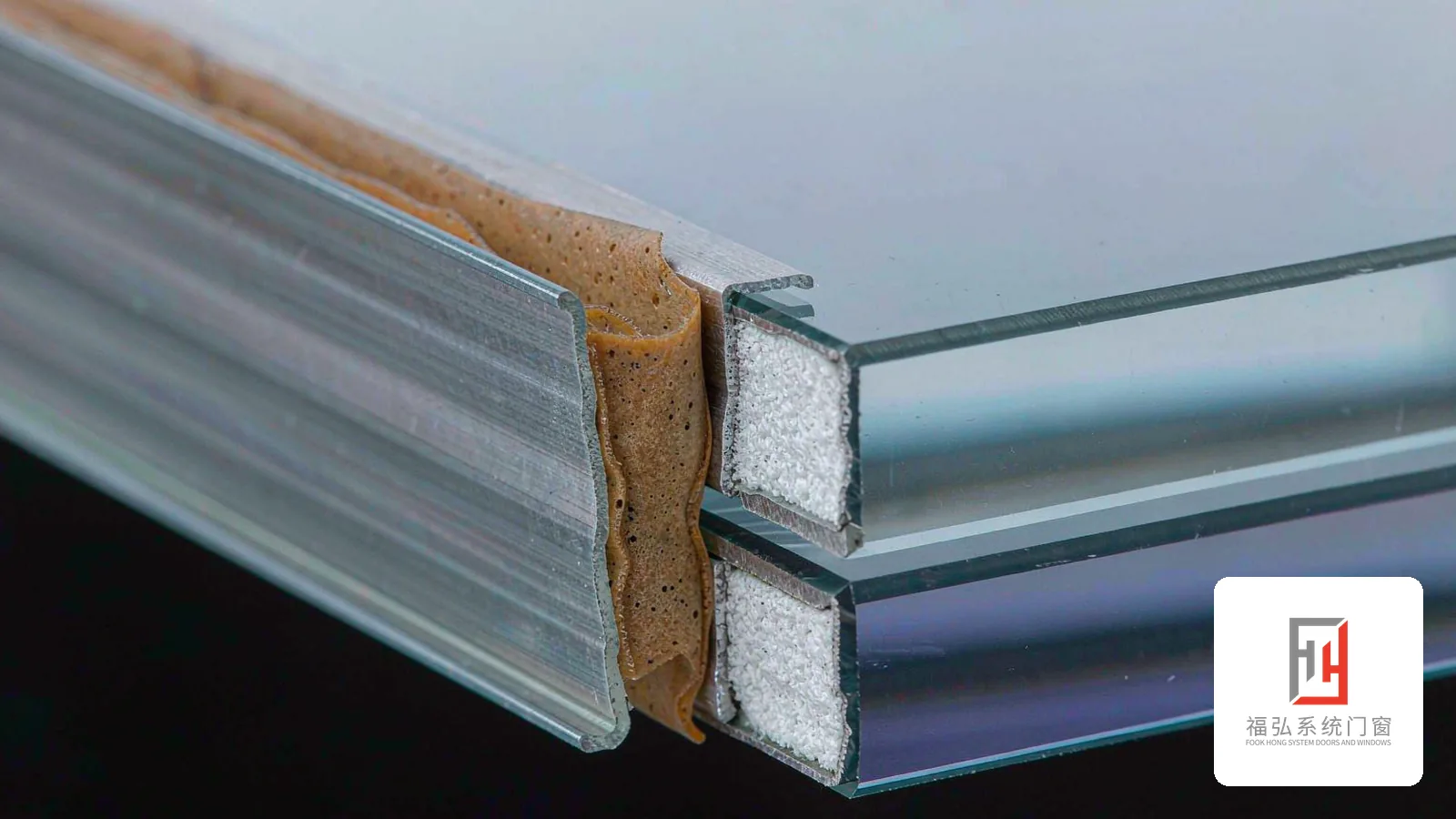
Argon is invisible, but it measurably improves the U-value of an insulated glass unit. Here is the energy math behind the payback period — and how to verify the gas is actually inside.
On a glazing schedule, the words 'argon fill' usually cost a few dozen yuan per square metre more, and many homeowners wonder why they should pay for something invisible. Let's put the numbers on the table.
The physics first. The insulating performance of an insulated glass unit depends on the gas between the panes. Air conducts heat at about 0.026 W/(m·K); argon about 0.017 — over thirty percent lower. More importantly, argon is heavier and less mobile, so convection loops inside the cavity are much weaker. Since heat crosses the cavity by conduction plus convection, suppressing convection lowers the whole U-value.
Now the arithmetic. A 5+20A+5 double unit filled with air gives a whole-window U-value around 2.8; the same unit with argon about 2.5; with argon plus Low-E coating, 1.8 or lower. Dropping from 2.8 to 1.8 cuts heat loss through the glass by roughly a third. For a Taiyuan flat with 15 m² of south-facing glazing, that saving converts to about RMB 300–500 of gas per heating season.
Payback: the argon-plus-Low-E upgrade adds roughly RMB 80–120 per m², about RMB 1,500–1,800 for fifteen square metres. At RMB 300–500 saved per year, the payback is around four years. Insulated units last fifteen-plus years and argon leakage is typically below 1% per year, so the upgrade pays for itself two to three times over its life. Verdict: clearly worthwhile in heated northern regions; in the south the energy math alone is thin, but condensation and comfort benefits remain.
Argon also raises the inner pane's surface temperature, visibly reducing winter condensation, and marginally improves acoustics by damping cavity convection.
The real question: how do you know the gas is actually inside? Some suppliers write argon on the schedule and fill nothing. Three checks: look at the process — argon is injected through the spacer's fill port and takes over a minute per hole, so hyper-fast lines cannot fill properly; ask for batch test data — the standard requires at least 85% argon concentration; and on acceptance, spot-check a random window with a gas analyser — the probe leaves a small hole that is resealed with a plug. We support random unit testing on site: you test the actual window, not the paperwork.
Finally, pair argon with a warm-edge spacer. A conventional aluminium spacer is itself a thermal bridge that wastes part of the gas benefit; a warm-edge spacer lowers the U-value by another 0.1–0.2. When a schedule shows 'argon + warm edge', that is usually a sign the supplier knows what they are doing.