
Choosing a Stainless Security Mesh Screen: Mosquitoes, Burglary and Child Safety
A security mesh screen is not about the finest weave or the thickest wire. Here is how to choose mesh opening, wire diameter and frame workmanship — and the escape question every family must settle first.
Security mesh screens have become standard kit, but market quality varies enormously: loose frames and shedding wires after two years, blocked airflow and light — and, in an emergency, a barrier. This article covers the selection logic, including one topic salespeople rarely raise.
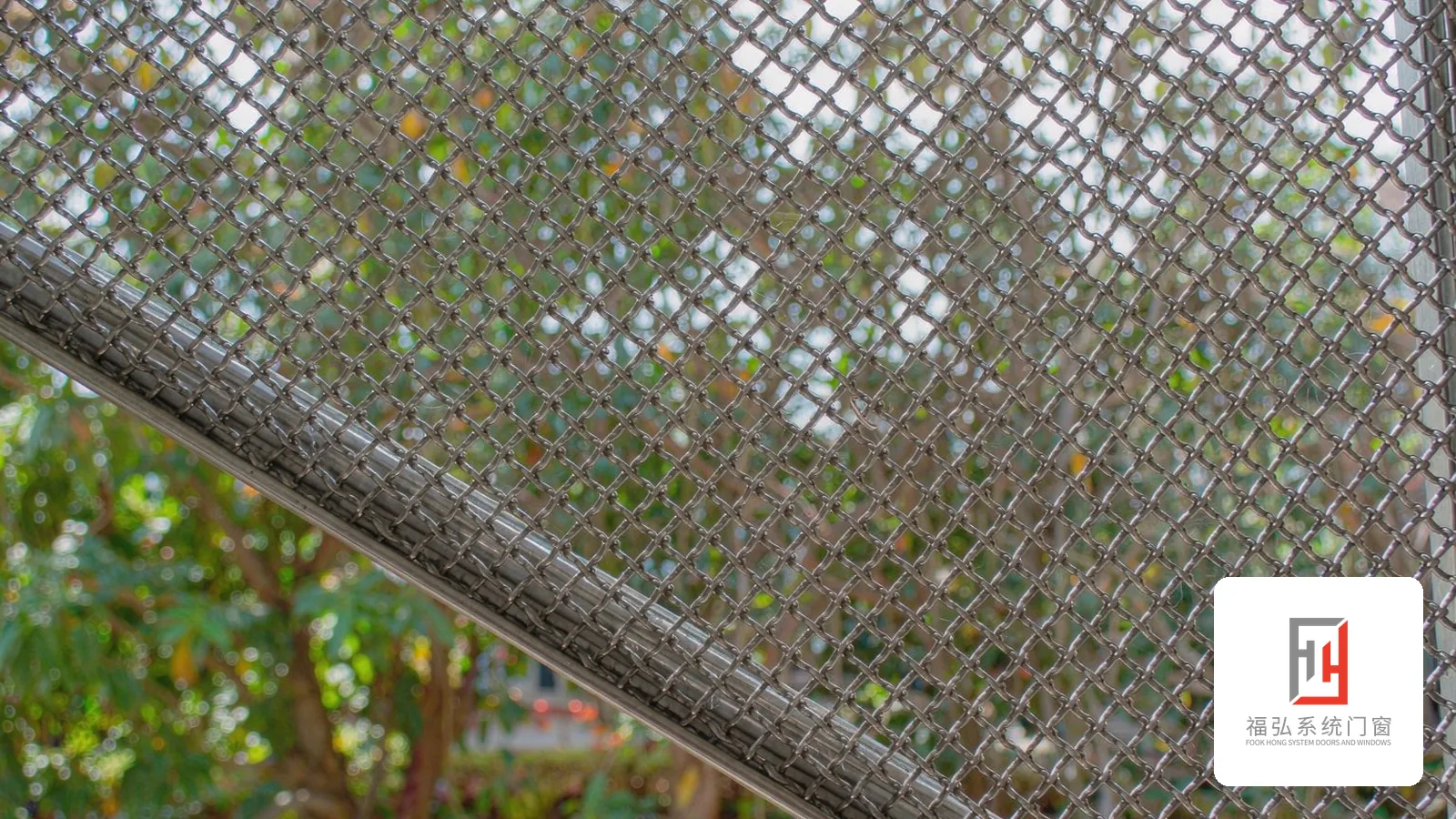
Construction first: a woven stainless mesh tensioned into an aluminium frame, fixed outside the window with screws. Three parameters matter: mesh opening, wire diameter and steel grade.
Mesh opening balances mosquito protection against ventilation. Around 11 mesh keeps out ordinary mosquitoes; 14 mesh also stops midges and catkins — but each step up cuts airflow and light. Higher floors with strong wind can go denser; lower floors often feel stuffy with the finest mesh. Choose by floor and environment, not by maximum density.
Wire diameter balances strength against visibility. Around 0.5 mm is common; 0.6–0.8 mm resists prying better but blocks more light and wind. Ordinary flats: 0.5–0.6. Ground and second floors or genuine security needs: 0.8. Remember strength is systemic — the thickest wire cannot save a thin frame with too few fixings. Count the fixing points: spacing no more than 400 mm on all four sides with screws at every corner is the baseline.
Steel grade: insist on 304 or better. Some products pass 202 or galvanised wire off as 304; ask for material test reports, and use a magnet only as a first screening (cold-worked 304 can be slightly magnetic, so it is not conclusive). Coastal locations such as Sanya should go straight to 316 for salt resistance.
Child safety: the appeal of security mesh over ordinary screens is whole-panel strength — a child cannot push through. But settle one question before ordering: how does this window still work as a fire escape? Never weld your family into the building. Two proven arrangements: make some screens openable (hinged with an interior release) and only fix the ones that are not escape routes; or, if the balcony is enclosed, keep at least one unobstructed inward-opening window. Decide this at design stage — changing it after installation is rework.
Workmanship details: the mesh should be drum-tight (press it; loose panels flutter), frame corners join flush, and hinges and latches must be stainless. Typical pricing is a few hundred yuan per standard sash; quotes far below market warrant suspicion on materials. A security mesh is a fit-once, use-for-years component — choose the right specification the first time.