
Half Your Summer Bill Goes Through the Windows: Glazing Plus Shading, Together
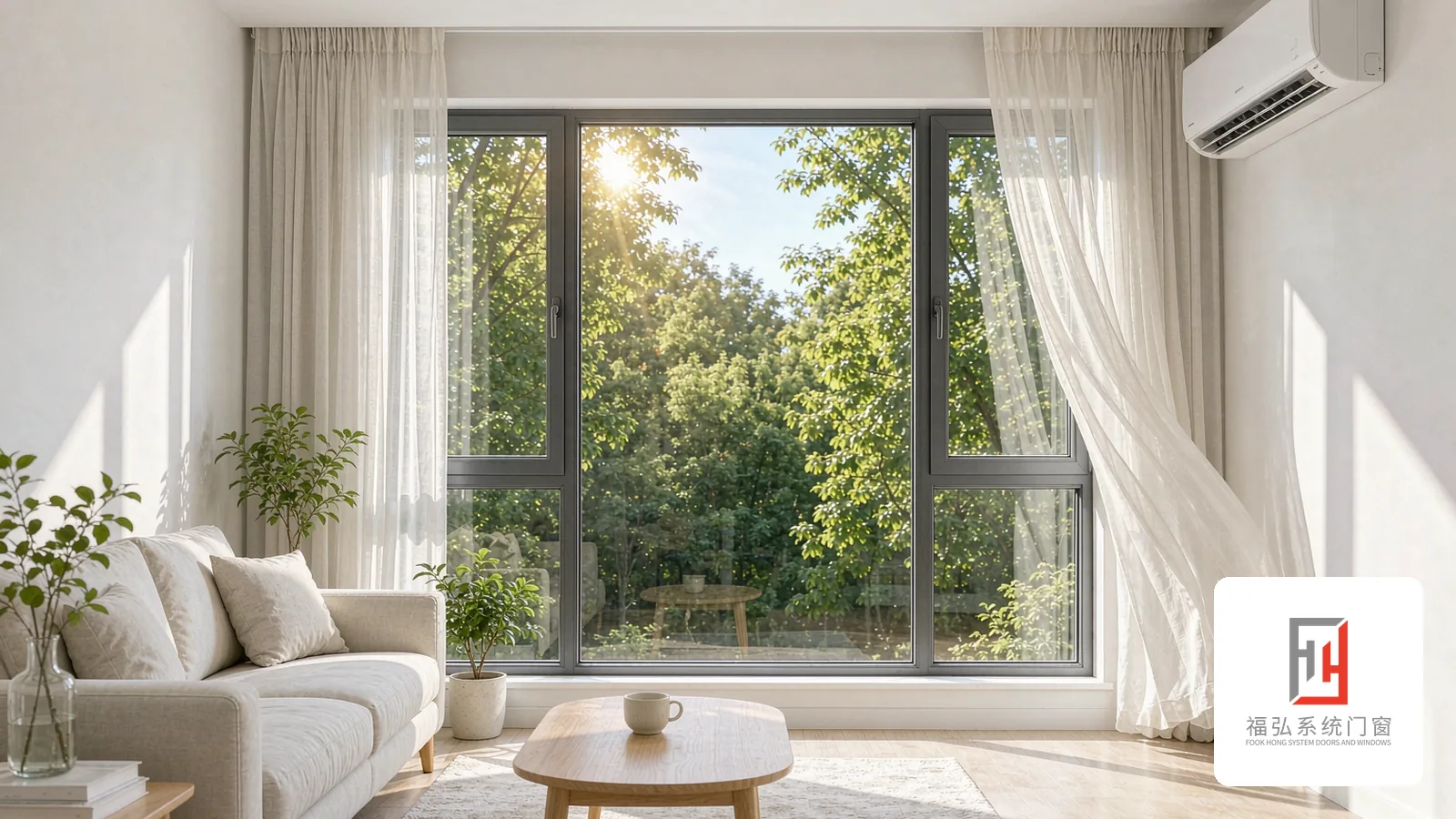
In summer the biggest load on an air conditioner is not hot air — it is the sun. How solar gain enters a room, how glazing and shading divide the work, and the best combination for east and west exposures.
Many households notice the same pattern: a newer, more efficient air conditioner, yet the summer bill barely drops. The problem is not the AC — it is the windows, especially east and west exposures, pumping heat in at full power. Here is how summer heat enters, and how glazing and shading divide the work.
Heat enters through three paths. Solar radiation: sunlight passes through the glass and heats floors and furniture, which then warm the air — the largest share, often over half the load, and easy to underestimate because it arrives as brightness, not warmth. Conduction: hot outdoor air slowly transfers through glass and frames. Infiltration: hot air leaking through gaps.
Against radiation, the most effective interception point is outside the glass. Solar-control Low-E does this inside the unit: it reflects most near-infrared while transmitting visible light — bright but not baking. For west-facing rooms target SHGC below about 0.35; large south windows around 0.4; north windows need not bother.
External shading is even more efficient than coating because it stops heat before the glass — over 70% — while internal shading (curtains) only blocks the direct beam after heat has entered the space. Priority: external shading over coating over curtains. In practice they combine: external shades for peak hours, solar Low-E all day, curtains for privacy and ambience.
Conduction is a glazing-specification problem — cavity width, argon, warm-edge spacers turn a constant leak into manageable insulation. Infiltration is an air-sealing problem: if you feel hot draughts with the window closed, check gaskets and locking points; a few dozen yuan of gasket can be immediately effective.
Recommendations by situation. Severe west exposure (especially top floors): solar Low-E plus external louvres, upgrade west glazing to triple if needed — the best return on investment. Large south windows: slightly higher-transmission Low-E with retractable external shading, keeping winter solar gain. Rentals: silver reflective film plus heavy curtains as the low-cost option, cutting two to three tenths of radiant gain.
One overlooked point for enclosed balconies: the balcony is the first greenhouse. Without shading there, the sun heats the balcony and the heat leaks into the living room through the door's gaps and glass. Shade the balcony roof or upgrade its glazing and the living room's cooling cost drops noticeably. Half of a summer bill is a lesson bought through the windows; fix the windows and the air conditioner finally fights on even terms.