
System Windows vs Ordinary Windows: Where the Three-Fold Price Difference Goes
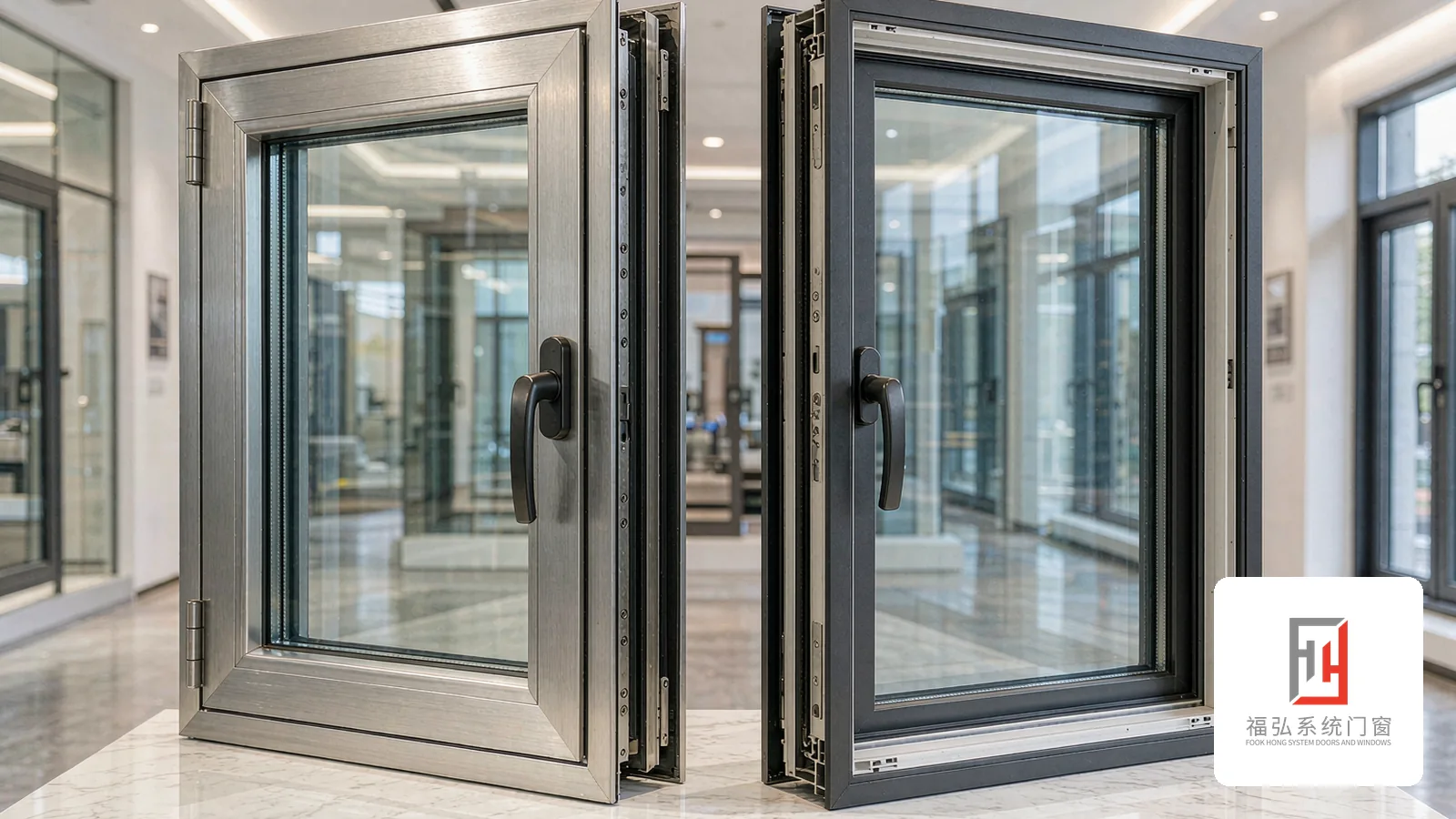
Two visually identical windows can differ three-fold in price. This breakdown covers the real costs behind a system window — R&D, profiles, sealing, hardware, fabrication and service — and which premiums are worth paying.
Shoppers are often confused: two windows that look alike, one quoted at 600 yuan, another at 1,800. Usually neither is a rip-off — they are different kinds of product. Here is where a system window's extra cost actually lives.
R&D logic. An ordinary window is generic profiles assembled by whoever fabricates them; quality depends on the crew. A system window starts from performance targets — U-value, acoustic rating, air and water tightness — and designs the whole section, gaskets, cleats and hardware grooves around those targets, verified by tested whole-window performance. You buy a validated combination, not an assembly of parts.
Profiles. System sections typically carry five or more chambers, full wall thickness, wide thermal breaks and purpose-designed gasket grooves; budget profiles simplify every one of those details. Each millimetre looks cheap; summed, it is a large share of the price gap.
Sealing. System windows use three seals — outer water barrier, middle pressure-equalisation, inner air seal — with gaskets that fit machined grooves under compression. Ordinary windows rely on one or two seals glued on. Everyday air-tightness, water-tightness and acoustics are decided here.
Hardware. System windows use standardised (Euro-groove) hardware tested through tens of thousands of cycles; ordinary windows source parts case by case. The smooth, firm, rattle-free feel comes from this layer.
Fabrication. Corner-cleat injection, setting blocks and machining accuracy are standard practice in a system factory and optional in a workshop. The difference is invisible on handover and shows up in years five to ten as leaking corners and sagging sashes.
Service. System brands deliver survey, design, installation and after-sales as a closed loop. Service is a cost structure, not a virtue — and it is priced in.
Which premiums are worth it? Ranked by everyday impact: sealing first, glazing second, hardware third, profile section fourth. What is marketing? Claims like 'nano coating, never gets dirty', repackaged generic processes, and vague glazing schedules. One test covers all of it: real performance must reduce to verifiable numbers — U-value, dB rating, air and water tightness classes. If the schedule dares to write them and the installer dares to test them, it is a genuine system window.
Practical advice: with a comfortable budget, go full system window once and be done. With a tight one, reduce area and the number of vents rather than sacrificing sealing and glazing — those two decide how the home feels every single day.