
Winter in Taiyuan: How Much Heating Cost Can an Insulating Window Actually Save?
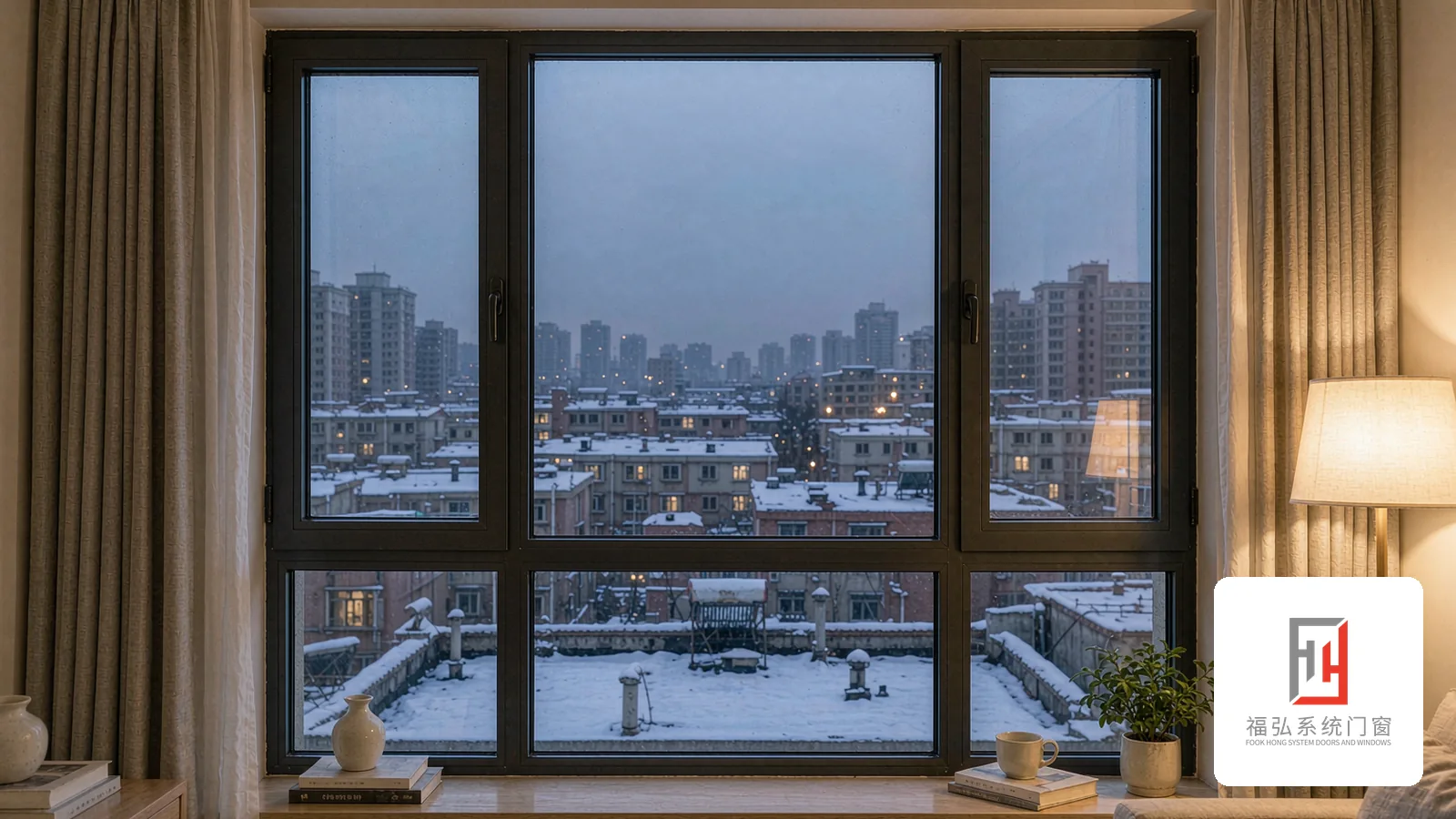
Taiyuan's heating season lasts four months, and glazing is the weakest link in the building envelope. Here is a realistic account of what changes — indoor temperature, condensation and energy bills — after replacing old single glazing with a proper system window.
Taiyuan's heating season runs from November to March. Many families feel cold indoors despite adequate heating, and the culprit is usually the window: a wall is over 300 mm thick, a window only tens of millimetres, and most of it is glass. Windows are the weakest link in the envelope, so heat escapes there first. Let's put real numbers on it.
Heat escapes through three paths. The glass: single clear glazing has a U-value around 5.8, ordinary double glazing about 2.8, and a quality triple unit with Low-E coating below 1.5 — lower is better. The frame: aluminium conducts heat, so an ordinary aluminium frame without a thermal break acts as a thermal bridge; condensation running down the sill is its classic symptom. The gaps: hardened seals on old windows let cold air creep in — the draught you feel sitting near the window is air leakage, not imagination.
We compared two identical apartments in the same estate: one kept its 2005-era single-glazed sliders, the other was refitted with a multi-chamber triple-glazed system window. With identical heating habits, the refitted apartment was 3–4°C warmer at night, and the cold radiation near the glass disappeared. In cost terms: for a home with its own gas boiler, poor windows mean burning roughly 15–25% more gas for the same comfort — about RMB 1,500–2,500 per heating season for a 100 m² flat, paid every year, against a one-time window investment.
Condensation matters too. On a −10°C night, old glazing weeps with condensation. That is not defective glass — the inner surface is simply below the indoor dew point. Low-E insulated glazing raises the inner surface temperature and the dripping largely stops, which also prevents the mould that thrives on damp window surrounds, a real concern for children and elderly family members.
Where not to save: thermal-break width (24 mm minimum for Taiyuan), glazing (double Low-E at minimum, triple if the budget allows), and installation — an insulating window fitted with skimpy foam and broken seals is a wasted purchase. Where you can save: shape. A regular rectangular window outperforms an oversized irregular one at the same budget.
Finally, schedule the replacement before the heating season starts. October is ideal because foam and sealants cure properly in mild temperatures. If your windows already feel cold and weep on winter nights, now is the right time to book a survey.