
From Profile to Window: Fourteen Processes Before a System Window Ships
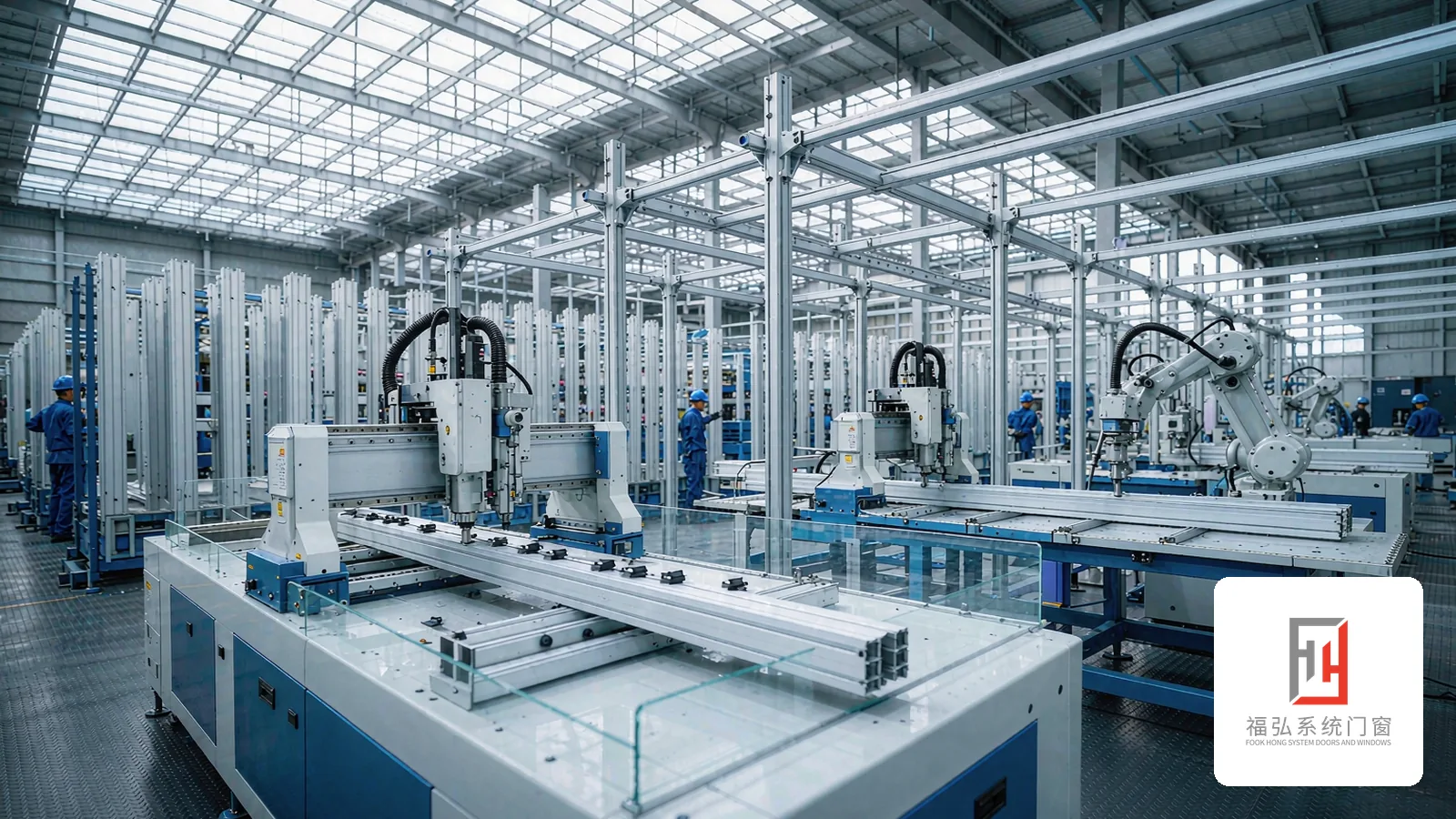
A system window passes through fourteen processes before it ships, each with its own quality gate. Walk the production line and see which steps decide a window's lifespan.
After touring a window factory, customers most often say the same thing: a window passes through many more hands than expected. This article walks the fourteen processes in order — not for show, but so you know what each contributes to final performance and where the quality gates sit. Once you understand the flow, you will look at windows differently.
Processes 1–3: incoming materials. Profiles are inspected for wall thickness, coating and colour; glass for lamination and edge work; hardware batch-tested for cycling. Failures return whole batches. Materials are then sorted and labelled per order — every part traceable to its batch.
4: cutting. Double-head saws cut to angle tolerances within ±0.5°; cutting precision is the origin of later corner tightness.
5: milling and punching. Drainage slots, hardware grooves and gasket channels are formed by fixture, never hand-marked — hand precision cannot sustain batch consistency.
6: mullions and reinforcement. Wide spans get steel reinforcement inside the mullion; length and fixing count are specified. Missing or short stiffeners are the industry's most common shortcut.
7: gasket insertion. Gaskets press into machined grooves with welded or moulded corners. The difference in feel today becomes the difference in air-tightness in year five.
8–10: corner joining. Cleats seated, corners pressed, two-component glue injected into the corner cavity. Many small shops skip injection entirely — yet it decides corner strength and water resistance. Glue cures on a timer; uncured corners are not handled.
11: glazing. Setting blocks placed at defined points, glass landed, beads fixed. Misplaced blocks let glass sag — the true source of many 'heavy operation' complaints.
12: assembly and adjustment. Sashes hung, hardware tuned, open-close cycles tested; no unit leaves the zone until smooth.
13: final inspection. Appearance, diagonals, water spray, operation feel — recorded item by item, then certified; the certificate matches the warranty card.
14: packing. Corner guards, film, rain-proof wrapping; transport knocks and water ingress are the first challenges after the factory.
Two lessons emerge. The expensive processes are the invisible ones: corner injection, setting blocks, welded gasket corners — no impact on day-one looks, decisive for year-ten performance; this is where the cost gap between system factories and workshops truly lives. And quality comes from process, not inspection: inspection catches known defects, process prevents them. Next time you compare quotes, ask two questions: 'Is corner glue cure timed?' and 'Are setting blocks placed by fixture or by hand?' Those two answers reveal the real level of any factory.